
Septic Inspection in Orlando, FL
A septic inspection in Orlando checks your tank, pipes and drain field, then gives you a written report. Most take 1 to 2 hours. We offer a full septic inspection service across Orange, Seminole, Osceola and Lake County. We help buyers, sellers, landlords and homeowners who see warning signs. You get a clear answer and photos, not guesswork.
Septic Inspection Orlando Homeowners and Buyers Can Trust
A good report tells you what you have and how healthy it is. It also shows what upkeep will cost. As an Orlando septic inspection company, here is what we give you on every visit.
Records first
We pull the permit file so we know the tank size, age and drain field layout.
The tank opened
We do not judge a tank by flushing a toilet. We open the lids and look inside.
A sludge reading
You see how full the tank is and when it needs pumping.
A drain field test
We push water through the system and watch how it drains.
A photo report
You get pictures of the tank, baffles and lids with notes in plain words.
A clear result
Each report says "passed" or "needs work," with the reason and next steps.
Many older Orlando homes have permits on file with the Florida Department of Health in Orange County. Those records often show where the tank sits and when it went in. We check them before we dig, which saves you time and digging fees.
What Does a Septic Inspection Include?
A full septic tank inspection service checks the tank, baffles and pipes. It also tests the distribution box and drain field. It shows whether each part works today and how much life it has left. Here are the 8 steps we follow.
- Pull the records. We look up the permit, tank size and install date.
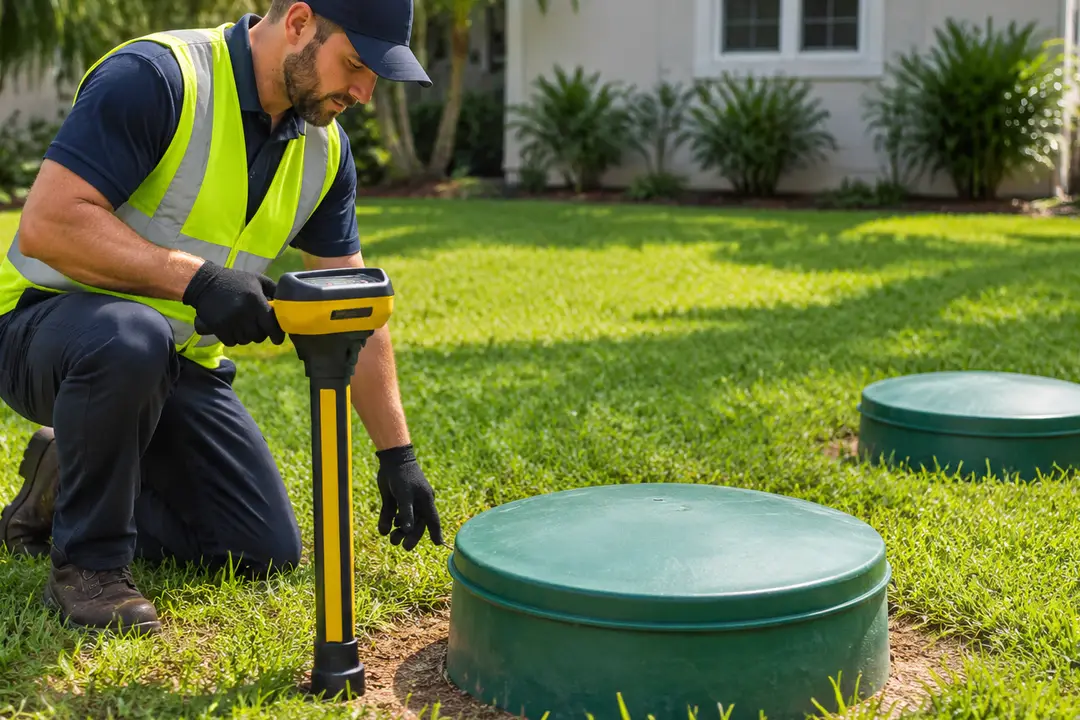
- Find the tank. We use the permit sketch, a probe rod or an electronic locator.
- Open the lids. We dig to buried lids and open every compartment.
- Measure the layers. A sludge judge shows the depth of sludge, scum and liquid.
- Pump and look inside. With the tank empty, we check the walls, floor and baffles for cracks and wear.
- Run a load test. We send a measured amount of water through the system and watch the levels.
- Check the drain field. We look at the distribution box, the field area and the effluent filter.
- Write the report. You get photos, readings, a result and repair notes if needed.
Our septic tank inspection services in Orlando, FL follow this same order every time. That way, two reports on two homes can be compared side by side.
Visual Inspection vs Full Inspection
| Visual inspection | Full inspection | |
|---|---|---|
| What it covers | Lids opened, levels checked, yard walked | Tank pumped, walls and baffles checked, load test, drain field check |
| Best for | Routine checkups between pump outs | Buying or selling a home, warning signs, older systems |
| Time | About 30 to 60 minutes | About 1 to 2 hours |
| What it can miss | Cracks below the waterline, a weak drain field | Very little, unless pipes need a camera |
If you are buying a home, choose the full inspection. A visual check cannot see the bottom two thirds of a full tank.
When Do You Need a Camera Inspection?
A camera inspection makes sense when the report shows slow flow, roots or a sagging pipe. It also helps with homes built before the 1980s, when clay and cast iron lines were common. A small camera travels through the pipe and records what it finds. In Orlando, a sewer camera inspection averages about $420, with most homes paying $175 to $665 (Angi, March 2026).
How Long Does an Inspection Take?
Most full inspections take 1 to 2 hours. A visual check can take as little as 30 minutes. Buried lids, a large tank or a camera can add another hour. Plan for the crew to need clear access to the yard for the whole visit. You will usually get the written report the same day or the next.
What Will Make a Septic System Fail Inspection?
A system fails when a part is broken, missing or no longer treating waste safely. These are the most common reasons a report comes back "needs work":
A cracked or crumbling tank
Older concrete tanks can corrode from sewer gas over the years.
Broken or missing baffles
Without them, solids flow straight into the drain field.
A high water level
Liquid above the outlet pipe means the drain field is not taking water.
Surfacing effluent
Wet, smelly spots or sewage in the yard point to a failing field.
Roots in the pipes or tank
Trees near the system can crack lines and block flow.
No drain field at all
Some very old homes drain into a pit instead of a real field.
A tank too small for the house
Florida's minimum tank size for a home is 900 gallons under Rule 62-6.008.
A dead aerobic system pump
An aerobic unit without a working air pump stops treating waste.
What Happens If Your System Fails?
A failed result is not the end of a sale. Most problems fall into one of three fixes. A small part like a baffle or lid can be repaired. A failing drain field may need repair or replacement. If a public sewer line is available, Florida law requires homes to connect within one year of notice. Your report should say which path fits and what each one costs.
Do You Need a Septic Inspection When Buying a House in Florida?
No Florida law requires an inspection when you buy or sell a home, as of 2026. Still, most buyers get one. Many lenders ask for one too. On FHA and VA loans, the appraiser can make an inspection a condition of the loan. For any septic tank inspection in Florida, book it early in your contract's inspection period. That leaves time to negotiate if something fails.
A residential septic inspection in Orlando costs a few hundred dollars. A failed system can cost tens of thousands. Buyers on Reddit report repair quotes of $20,000 to $35,000 after an inspection found problems.
Who Pays for the Inspection?
The buyer usually pays, because the report protects the buyer. It can be negotiated in the contract. Some sellers order one before listing to show the system is sound and speed up the sale.
Why a Home Inspector's Flush Test Is Not Enough
A general home inspector often runs the taps and flushes the toilets for a few minutes. That sends only about 30 gallons into a tank that holds 900 gallons or more. The water simply pushes out the same amount from the other end. A failing drain field can hide behind that test.
Vacant homes make this worse. When no one lives in a house, the drain field dries out and seems fine. Problems show up a few weeks after a family moves in. A full inspection with a load test catches what a flush test misses.
What Is the New Septic Law in Florida?
There is no new law that requires yearly inspections for Florida homes. You may see that claim online, but it is not true. Yearly checks apply to aerobic and other advanced systems under their maintenance contracts.
Here is what has changed in recent years:
Wekiwa Springs and Rock Springs
Since March 1, 2025, some homes here face a stricter rule. Lots under 1 acre must add a nitrogen reducing system at repair time. Buyers near Apopka and Wekiwa Springs State Park should check this before closing.
New systems near springs
Since July 1, 2023, new systems on small lots in protected springs areas must be nitrogen reducing.
HB 1417 (2026)
This law adds rules for the Indian River Lagoon on the east coast. It does not change septic rules in Orlando.
The FDEP Onsite Sewage Program sets these rules. Local permits still run through the county health department office.
Who Can Do a Septic Tank Inspection in Florida?
Florida sets out who can inspect an existing system under Rule 62-6.001(5). These people qualify:
- master septic tank contractors
- registered septic tank contractors
- state licensed plumbers
- people certified under Section 381.0101 of Florida law
The inspector must give you a copy of the state procedure. You can ask for a full inspection or only part of one. Aerobic treatment units are checked by their approved maintenance company instead.
Not all septic tank inspection companies offer the same depth. Ask each one these questions:
- Do you pump the tank and look inside?
- Do you run a load test on the drain field?
- Will I get photos and a written result?
- What is your state registration number?
A company that only lifts a lid and looks is doing a visual check, not a full inspection.
Can You Inspect Your Own Septic System?
You can watch for warning signs yourself. Look for slow drains, gurgling, odors and soggy ground over the drain field. A real inspection is different. It takes a trained pro, a pump truck and the right tools. Lenders and buyers also want a report from a qualified inspector, not the owner.
How Much Does an Inspection Cost in Orlando?
An Orlando inspection averages about $558, and most homes pay $203 to $913 (Angi, August 2026). A visual check costs less. A full inspection with pumping, a load test or a camera costs more. Digging up buried lids can add $50 to $255.
Be careful with free inspection offers. Most are a quick look meant to sell you a big repair. The cheapest septic inspection in Orlando is the one you only pay for once. Choose a full inspection with a written report.
Why Orlando Soil Makes Inspection Timing Matter
Orlando's ground changes with the seasons. Much of Orange County sits on Myakka fine sand, which drains fast when dry. In the summer rainy season, the water table can rise to less than 10 inches below the surface. That can last 1 to 4 months, according to FDEP.
A drain field that works in March may flood in August. If you inspect in the dry season, ask the inspector how the system will handle wet months. A good report notes signs of past flooding, like stains in the tank or a high water mark.
Storms add more stress. Hurricane Ian dropped more than 14 inches of rain on Orlando in 2022. Hurricane Milton dropped 14.83 inches at Orlando West in 2024. UF/IFAS Extension advises waiting until floodwater drops before you pump or test a system.
How Often Should You Get Your Septic System Inspected?
The EPA advises having a professional inspect a typical system every 3 years. Aerobic units need checks more often, based on their service contract. Book an extra visit:
- before you list a home for sale
- after a hurricane or long flood
- when drains slow or the yard stays wet
- if the home sat empty for months
Pairing an inspection with pumping saves a trip. The crew can check the empty tank while it is open.
How to Prepare for Your Inspection
A little prep makes the visit faster and the report more accurate.
- Request your permit records from the Florida Department of Health in Orange County at 6101 Lake Ellenor Drive.
- Clear a path to the tank lids and drain field.
- Use water normally for 2 days before the visit, so the system is not unusually dry.
- Open the gates and keep pets inside.
- Share any past pumping receipts or repair bills.
If the home is vacant, tell us. We may run extra water to test the drain field under real use.
How to Avoid Inspection Scams
Most septic companies are honest. A few use the inspection to scare owners into big repairs. Watch for these signs:
- A "free inspection" that ends with a high pressure sales pitch.
- A quote that jumps from a few hundred dollars to thousands without proof.
- No photos of the problem.
- Pressure to sign the same day.
Local septic companies have warned about these schemes for years, including crews who block cleanouts to fake a problem. Always ask for photos and a written reason. Get a second opinion before you pay for a drain field or tank replacement.
Septic Inspections Across Greater Orlando
We offer septic systems inspection services across Orlando and the towns around it. Some areas rely on septic more than others.
Pine Hills
Many homes from the 1950s and 1960s still use their original systems.
Apopka and Wekiwa Springs
Homes here may fall under the stricter springs repair rule.
Windermere
About 1,143 septic tanks sit near the Butler Chain of Lakes. Florida requires systems to stay 75 feet from lakes.
Bithlo
Large rural lots off SR 50 run almost entirely on septic.
Chuluota and Geneva
These Seminole County areas have big lots and few sewer lines.
We cover homes near SR 408, SR 417, Colonial Drive and Orange Blossom Trail. Looking for a septic system inspection service near you? If you live within a few miles of these roads, we can usually schedule fast. Every Orlando septic inspection we do comes with the same full report. We inspect single family homes, rentals, HOA properties and small businesses.
Septic System Inspection vs Pumping vs Home Inspection
| Service | What it checks | When you need it |
|---|---|---|
| Septic system inspection | Tank, baffles, pipes, drain field and records | Buying or selling, warning signs, every 3 years |
| Septic pumping | Empties the tank and measures sludge | Every 3 to 5 years |
| Home inspection | The house, with a quick flush and tap test | Every home purchase |
A home inspection and a septic system inspection do different jobs. You need both when you buy a home with septic.
Book Your Inspection Today
Ready for answers? Call (321) 872-9877 or book online. Tell us if the visit is for a home sale, and share your closing date. We work with real estate agents, buyers and sellers across Orange, Seminole, Osceola and Lake County. You get a photo report and a clear result for your septic inspection in Orlando, FL.
Frequently Asked Questions About Septic Inspections
Still have a question? Call and talk to a real person.
Call (321) 872-9877 →How Much Does It Cost to Inspect a Septic System in Florida?
Most Florida inspections cost a few hundred dollars. In Orlando, the average is about $558, and most homes pay $203 to $913. The price depends on the tank size, buried lids and any added pumping or camera work.
What Does an Inspection Report Include?
A good report lists the tank size, age and condition. It shows sludge and scum levels, baffle condition and drain field results. It includes photos, a “passed” or “needs work” result and repair notes. Keep a copy for your records and for future buyers.
Can a Septic System Pass in One Season and Fail in Another?
Yes. In Orlando, a high water table in the rainy season can flood a weak drain field. A system that passes in spring can struggle in August. Ask your inspector how the system will handle wet months.
Does a New Septic System Need an Inspection Before I Buy?
It is still a good idea. A newer system can have install problems, damage from heavy trucks or a missing final approval. Check that the permit shows a final inspection. A quick inspection confirms the system works as it should.
Should the Tank Be Pumped During the Inspection?
For a full inspection, yes. Pumping lets the inspector see the walls, floor and baffles. A tank full of waste hides cracks below the waterline. If the tank was pumped recently, a visual check may be enough.
Can You Inspect an Aerobic (ATU) Septic System?
Yes, but the rules are different. Florida requires aerobic units to have a maintenance contract with an approved company. That company handles routine checks. During a home sale, ask the seller for the maintenance records and the operating permit.
What If the Seller Already Has an Inspection Report?
Read it, but check the date and who wrote it. A report from months ago may not show current problems. Many buyers order their own inspection for an independent view.
How Do I Find My Septic Permit Records in Orange County?
Contact the Florida Department of Health in Orange County. The office at 6101 Lake Ellenor Drive keeps many septic permit records. Have your address and parcel number ready. We can also look up records for you as part of the inspection.
Do Septic Inspections Check the Well Too?
An inspection does not test well water. It can check the distance between the well and the system. Florida requires at least 75 feet between a septic system and a private drinking water well. Test well water separately for bacteria and nitrates.
Call for Septic Service Today
Septic service across Orange, Seminole, Osceola and Lake County. You get a written price before we start.