
Septic Tank Service in Kissimmee, FL
Need septic tank service Kissimmee homeowners can count on? We pump, clean and repair systems across the city and nearby Osceola County. We work on homes near Lake Toho, along US 192 and out toward Poinciana. Before we arrive, we pull your old county permit, so the crew knows where your tank sits.
What Septic Services Do Kissimmee Homes Need Most?
Local homes call us most for pump outs, deep tank cleanings, drain field repairs and pump alarm problems. Many lots here sit low and flat near the lakes, so fields work hard in the rainy months. Vacation rental homes add another load, with full houses week after week.
Pump Outs on a Schedule That Fits Your Home
What about a common 1,000 gallon tank? For a family of four, plan on every 3 years or so. Smaller households can stretch to 5. A rental home that sleeps 8 or 10 guests fills much faster. Those homes often need a pump out every 1 to 2 years.
We measure the sludge and scum layers each visit. Then we give you a due date based on what is actually in the tank.
Kissimmee Septic Tank Cleaning
A cleaning is a deeper job than a quick pump out. The crew washes down hardened sludge, scrapes buildup off the outlet and rinses the effluent filter. Grease from busy rental kitchens is a common culprit here. We also look for cracked baffles while the tank is empty.
Drain Field Repair on Wet Lots
When a field fails, water pools in the yard or drains back up into the house. On low ground, the fix can mean new lines, a raised bed or extra fill. We dig test holes first, so you only pay for the repair your yard really needs.
Related: Field repair and replacement.
Pumps, Alarms and Aerobic Units
Raised fields and aerobic units depend on pumps and floats. If an alarm sounds, cut back on water and call us. We test the float switch, the pump and the control panel. Aerobic owners also need regular service under their state maintenance contract.
All of this assumes your home has a tank. Many here do not.
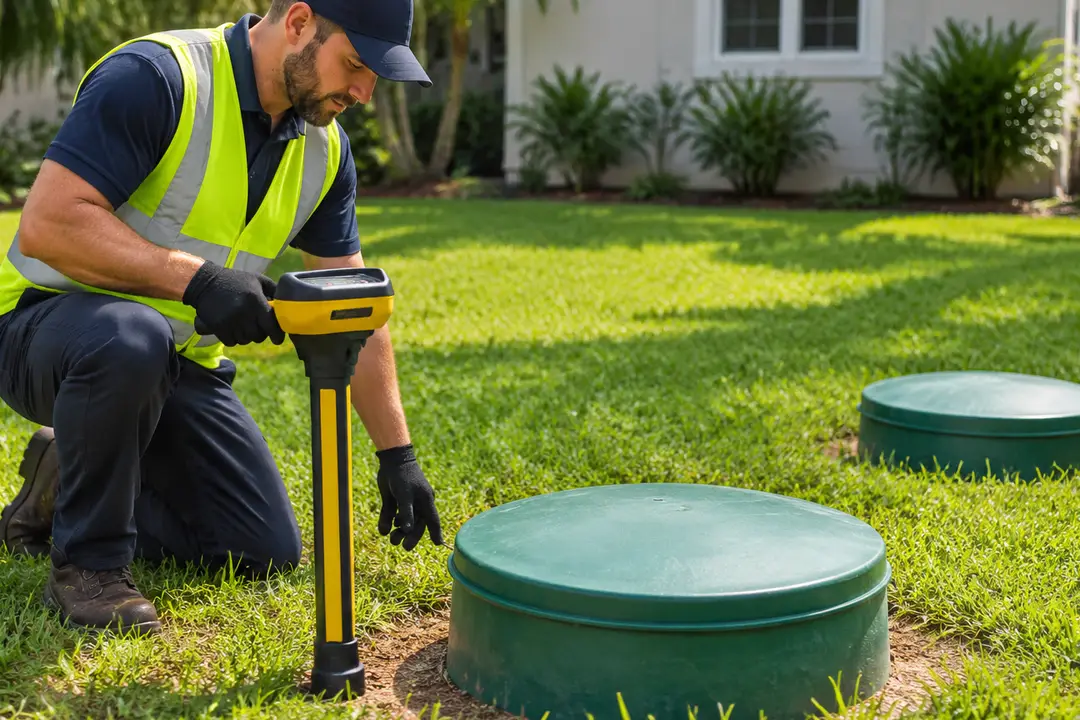
1200 × 800 · job photo in this city
Is Your Kissimmee Home on Toho Sewer or Septic?
Toho Water Authority runs water and sewer for Kissimmee, Poinciana and unincorporated parts of Osceola County. It serves more than 100,000 customers. Many neighborhoods inside the city are on Toho sewer. Older streets and rural lots outside the lines still use septic tanks.
Toho is moving some Osceola homes off septic, too, starting with a $3 million project in nearby St. Cloud. Toho customer service is 407-944-5000.
Does Sink and Shower Water Go to the Septic Tank?
Yes. Everything that drains in a septic home flows to the tank. That includes sinks, showers, tubs, the dishwasher and the washing machine. This is why long showers and back to back laundry days strain a small tank. Spreading laundry across the week helps the field keep up.
When Toho sewer reaches your street, Florida law sets a deadline. You must connect within 365 days of written notice. If your system needs repair, that drops to 90 days.
If you are still on septic, your permit file is the best place to start.
How Do You Find Your Septic Permit in Osceola County?
Search the county health department’s online archive. The Florida Department of Health in Osceola County keeps old septic permits in a system called eBridge. You can search it by street name. Most files show the tank size, the field location and the date the system passed inspection.
The office sits downtown at 1 Courthouse Square, Suite 1200. Its phone is 407-742-8606. If your file is missing, the staff can help you request it.
A permit drawing saves time on every visit. Our crew finds the lid faster, and you skip the cost of probing the whole yard. It also tells a buyer what they are getting if you plan to sell.
That permit also shows which rules your system was built under.
What Septic Rules Apply in Kissimmee?
Florida’s septic rules now sit in Chapter 62-6 of the state code, run by FDEP. Kissimmee also sits in the Lake Okeechobee cleanup area. State scientists track nitrogen and phosphorus that flow south from here toward the big lake. The Upper Kissimmee area holds about 60,951 septic systems, the most in that whole plan.
That count is why the state keeps a close eye on local tanks. Osceola County, Kissimmee and St. Cloud all had to file local cleanup plans in 2024.
What Is the New Septic Law in Florida for Kissimmee Lots?
Since July 1, 2023, House Bill 1379 has changed new installs in state cleanup areas. Where sewer is missing, new systems on lots up to 1 acre must cut nitrogen. Existing systems that work fine do not have to change. A full replacement may trigger the rule, so ask before you plan one.
Rules matter, but water often matters more here.
Why Do Kissimmee Drain Fields Struggle After Heavy Rain?
Much of the city is low and flat, with Lake Toho and Shingle Creek close by. After a big storm, the water table can rise almost to the surface. A drain field needs dry soil below it to work. When the ground is full of water, wastewater has nowhere to soak in.
Hurricane Ian showed the risk in 2022. On October 1, Shingle Creek flooding forced the evacuation of Good Samaritan Village in Kissimmee. Hurricane Milton came in 2024. The city said its storm drains, the lake and the creek had room for that rain. Even so, many yards stayed soggy for days.
After a storm, cut back on water until the yard dries. Do not have the tank pumped while the ground is flooded. An empty tank in wet soil can float up and crack its pipes. If your field keeps flooding, a raised field may be the long term fix.
Related: New field installs.
When Should You Call About Warning Signs?
The early signs are easy to miss. Drains slow down in more than one room. Toilets gurgle after a shower. A sewage smell drifts near the tank lid or over the field. Soggy grass, or grass that grows faster over the field, also points to trouble.
Call when you notice the first sign. A pump out or filter cleaning now often saves the field.
How Much Does Septic Work in Kissimmee Cost?
Your price depends on the work, the tank size and how hard the lid is to reach. Permit work also carries county fees. Osceola County’s posted fee list shows $400 for a new system permit and $350 for a repair permit. A soil and benchmark test costs $115.
Raised fields and nitrogen reducing systems cost more than standard ones. We put every price in writing before the crew starts.
What Happens When You Call Us?
- We look up your permit. We search the county archive for your tank size and field drawing.
- We find the tank. The crew uncovers the lid and checks the sludge depth and outlet.
- You approve a written price. For repairs, we file the permit with the Osceola health office.
- We finish the job. You get a short report and a date for your next visit.
Which Kissimmee Areas Do We Serve?
We serve the whole city and the Osceola County land around it. That covers homes off US 192, US 17/92, Osceola Parkway and John Young Parkway. It includes streets near Kissimmee Lakefront Park, Old Town and the Monument of States. We also work near Kissimmee Gateway Airport and in Poinciana to the south.
Our trucks cover ZIP codes 34741, 34743, 34744, 34746 and 34747. The Florida Turnpike makes most visits quick, even on busy tourist days.
Related: St. Cloud, All service areas.
Kissimmee Septic Questions
Still have a question? Call and talk to a real person.
Call (321) 872-9877 →How Do I Look Up My Kissimmee Septic Permit?
Use the eBridge archive from the Florida Department of Health in Osceola County. Search by your street name. If nothing comes up, call the office at 407-742-8606 and ask for a records request.
Is My Street on Toho Sewer?
Call Toho Water Authority at 407-944-5000 with your address. You can also check your bill. A sewer charge means you are connected, and no sewer charge usually means you have a tank.
Do New Septic Systems Here Need Nitrogen Treatment?
Often, yes. The city is in a state cleanup area. New systems on lots of 1 acre or less need a nitrogen reducing design when sewer is not available. Larger lots may still use a standard system.
What Does a Septic Permit Cost in Osceola County?
The county’s posted list shows $400 for a new system and $350 for a repair. A soil and benchmark test adds $115. Confirm current fees with the health office before you budget.
How Often Should a Vacation Rental Tank Be Pumped?
More often than a family home. A rental with full houses most weeks may need a pump out every 1 to 2 years. Ask guests to keep wipes and grease out of the drains.
Should I Pump My Tank Right After a Flood?
No. Wait until the yard dries out. An empty tank in soaked soil can lift out of the ground. Use less water for a few days, then book an inspection.
Book Septic Service in Kissimmee
Call (321) 872-9877 for septic tank service in Kissimmee, FL. We pull your permit, find your tank and give you a written price before any work starts.