Septic Tank Location Services and Risers in Orlando, FL
Can't find your tank? We offer septic tank location services across Greater Orlando. We go from permit record checks to marking the lid in your yard. Once we find it, we can add a riser so you never dig for it again. We also map field lines before you build a pool, shed or fence.
Here is why tanks go missing in the first place.
Why Is the Tank So Hard to Find?
Most tanks sit just under the grass, so they are easy to lose. Common reasons include:
- Sod, mulch or gardens that grew over the lid
- Pavers, a patio or a driveway poured near the tank
- A home sold several times with no records passed along
- An older house built before access rules changed
- Lids that were never brought up to grade during the install
A lost tank costs you money on every visit. Crews have to probe and dig before they can even start a pump out.
How Does a Professional Locate Work?
We start with paperwork, then move to the yard. A typical locate follows these steps:
- Check permit records. Most systems built under a permit have a site drawing on file. It shows the tank, the field and their distance from the house.
- Trace from the house. We find where the sewer pipe leaves your home, often near a cleanout. Then we follow its direction into the yard.
- Probe the soil. A thin steel rod finds the hard edge of the tank lid without digging up the lawn.
- Use an electronic locator if needed. A small transmitter sent down the line lets a receiver pinpoint the tank from above.
- Mark it. We flag the lid corners and note the depth, so you have a record for next time.
Most locates take an hour or two. Hard sites with old records or deep tanks can take longer.
Where Are Septic Permit Records Kept?
At the county health department where your home sits. In Osceola County, owners can search old permits by street in the online eBridge archive. Seminole, Orange and Lake County health offices handle record requests by phone, email or in person. A permit file can save a lot of probing, so we check it first.
The tank is only half the system. The field is the harder part to find.
How Does Locating Drain Field Lines Work?
Locating drain field lines takes more care than finding the tank. Fields spread across a wide area, and the lines are thin. We use the same tools in a different order:
Permit drawing
It shows the layout, line count and distance from the tank.
Distribution box
Many fields start at a small box just past the tank. Finding it shows where the lines head.
Probing
We probe along the expected path to feel the gravel or chamber edges.
Grass patterns
In dry spells, grass over the lines can look greener or browner than the rest of the yard.
Inspection ports
Chamber fields often have small capped pipes that mark the line ends.
When we finish locating septic drain field lines, you get a simple sketch of the septic field location. It shows the tank, the lines and rough distances from the house. Keep it with your home papers.
How deep are the lines? In Florida, the bottom of a field is usually no more than 30 inches below the finished yard. Most sit much closer to the surface.
What Access Openings Does Florida Require?
Florida sets clear rules for tank access in Rule 62-6.013. Each compartment needs a manhole of at least 225 square inches. The access over the inlet and outlet must reach within 8 inches of finished grade. The lids must also be tamper and child resistant, such as a cover of 58 pounds or more.
Many older Orlando tanks were built before these rules or were buried deeper later. That is why so many owners have to dig for their lids.
What Is an Inspection Port on a Septic Tank?
An inspection port septic tank owners see is usually a short capped pipe, 4 inches or so across. It lets a technician look into the tank or a drain line without opening the big lid. Ports often sit over the inlet and outlet baffles. Field ports let a crew check how much water is standing in the lines.
A port is not a pump out opening. The tank still needs to be pumped through the large manhole. A cleanout is different again. It is a capped pipe on the house sewer line. Plumbers use it to clear clogs between the house and the tank.
Do You Need Septic Tank Risers in Orlando?
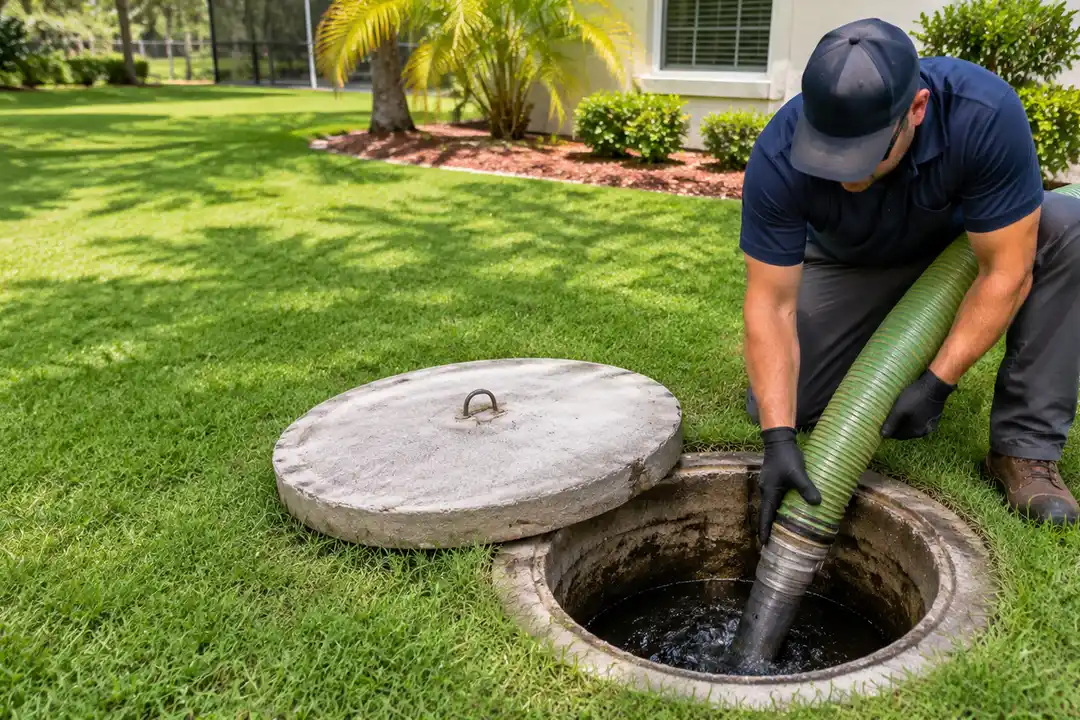
If your lids sit more than a few inches underground, a riser is worth it. Septic tank risers in Orlando bring the access up to the surface, so nobody digs again. Benefits include:
- Faster pump outs and inspections
- Lower service bills over time, since crews skip the digging
- Less lawn damage on every visit
- Easy access in an emergency backup
- A tank that is simple to find when you sell the home
Florida requires access within 8 inches of grade on newer tanks, and risers on deep pump tanks. Adding a riser to an older tank brings it closer to today's standard.
What Riser Materials Work Best?
Most risers today are heavy plastic or concrete rings. Plastic is light, easy to install and does not crack. Concrete is heavier and lasts a long time. Either way, the joint between the riser and the tank must be sealed watertight. A lid that locks or weighs enough to stop children from opening it is a must.
Can a Riser Go Under Pavers or a Deck?
It should not. The whole point of a riser is easy access. Leave the lid at grade, or use a hatch in the deck or paver layout. Remember that Florida does not allow decks, patios or pavement over the drain field itself.
When Should You Book a Septic Locate?
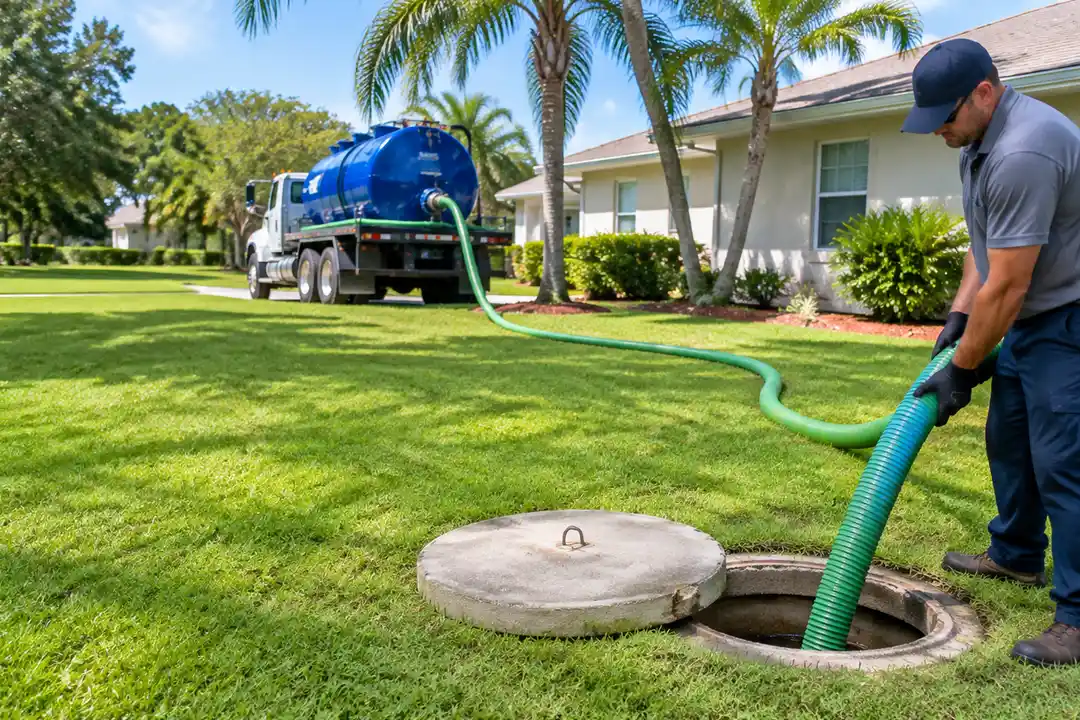
Book one before any of these:
- Buying or selling a home with septic
- A first pump out at a home you just moved into
- Building a pool, shed, fence, driveway or addition
- Planting trees or adding irrigation lines
- Any repair where the crew needs to reach the tank
Knowing where the system sits protects it from heavy equipment and new construction.
How Much Does Locating or a Riser Cost?
Price depends on how easy the tank is to find and how deep it sits. Good permit records and a shallow lid mean a quick visit. Deep tanks, missing records or tight access take longer. Riser cost depends on the material, the depth and how many lids your tank has. We give you a written price before we start.
Where Do We Offer Locating and Risers?
We locate tanks, map fields and install risers across Orange, Seminole, Osceola and Lake County. That covers Orlando and the 15 cities on our service area page.
Locating and Riser Questions
Still have a question? Call and talk to a real person.
Call (321) 872-9877 →How Deep Are Tanks Usually Buried in Florida?
Many tanks sit within a foot or two of the surface. Florida now requires access within 8 inches of grade, but older tanks can be deeper. Fill added during landscaping also buries lids further.
Can You Find My Tank Without Digging?
Often, yes. Permit drawings, probing rods and electronic locators can pinpoint the lid with little or no digging. We only dig once we know the exact spot.
Do I Need a Permit to Add a Septic Riser?
Usually not, when the riser only extends access to a tank in good shape. Repairs that change the tank need a county permit. We check with the health office before work starts.
Will a Riser Make My Yard Smell?
No. A riser sealed watertight with a tight fitting lid keeps gases in the tank. A smell near the lid usually means a bad seal or a tank problem worth checking.
Should I Mark My Tank After It Is Found?
Yes. Keep the sketch we give you with your home records. Many owners also add a small yard marker or note the distance from a corner of the house.
Book a Septic Locate or Riser
Call (321) 872-9877 for septic tank location services in Orlando and nearby counties. We find your tank, map your field and add risers so the next visit is quick and simple.