
Septic Tank Cleaning in Orlando, FL: A Full Deep Clean
Your tank was just pumped, but you still see thick sludge at the bottom. Many owners ask the same thing online. Was the job finished, or did the crew only skim the top? We offer septic tank cleaning in Orlando for homes where a quick pump out is not enough. We empty every chamber, break up packed sludge, rinse the tank and clear the lines. Then we measure what is left and show you the proof.
What Does a Deep Septic Clean Mean in Orlando?
A deep clean has 3 parts. First, the crew pumps every chamber dry through the main lid. Next, it breaks up the hard crust and stirs packed sludge back into the liquid. Last, it rinses the walls, jets the lines, cleans the filter and measures what remains.
Inside every tank, waste settles into three layers. Grease and light solids float to the top as scum. Heavy solids sink to the bottom as sludge. Clearer liquid, called effluent, sits in the middle and flows out to your drain field.
Over years, the bottom sludge packs down hard and the top crust thickens. A fast pump out often pulls the liquid and leaves those layers stuck in place. Orlando septic cleaning goes after exactly that buildup. The goal is a tank that is truly empty, not just drained.
That leads to the question most owners ask next.
How Is a Deep Clean Different From a Routine Pump Out?
A routine pump out removes liquid and loose solids on a 3 to 5 year schedule. A deep clean adds 5 steps: crust breakup, backflushing, a wall rinse, line jetting and filter cleaning. It ends with measured sludge levels, so you know the tank was fully cleared.
| Routine pump out | Deep cleaning | |
|---|---|---|
| What the crew does | Vacuums liquid, scum and loose sludge from each chamber | Full pump out, plus crust breakup, backflushing, wall and floor rinse, line jetting and filter cleaning |
| What gets checked | Basic levels | Sludge and scum depth, baffles, tees, filter and lines, with an optional camera look |
| When you need it | On your regular schedule | Overdue tanks, new home purchases, odors that return, clogged filters, before drain field work |
| What you get | Gallons removed | A written report with levels, photos and notes |
| Typical cost | About $350 average in Orlando (Angi) | Higher, because jetting and filter work add to the bill |
If your tank is on a healthy schedule, a routine pump out is usually enough. Our pumping page explains schedules and tank sizes in detail.
So when should you choose the deeper service?
When Do You Need a Cleaning Instead of a Routine Pump?
Five situations call for more than a standard visit. Each one points to buildup that a quick pump out tends to miss.
You Bought a Home With No Pumping Records
If nobody knows when the tank was last serviced, assume the worst. Years of packed solids may sit on the floor. Some may already be drifting toward the drain field, which costs far more to fix. Start with a full cleaning and an inspection.
Odors or Slow Drains Came Back After a Pump
If the smell or slow flow returned within weeks, something stayed behind. A hard crust, a clogged filter or a blocked inlet line are common culprits. A thorough cleaning finds and clears each one.
Your Effluent Filter Keeps Clogging
The EPA notes that outlet filters may need frequent upkeep. A filter that clogs again and again often means too many solids are reaching the outlet. Clearing the tank fixes the cause, not just the symptom.
You Are Selling, Buying or Planning Drain Field Work
An inspector or repair crew needs to see the tank clearly. A clean tank shows cracks, root entry and baffle damage that a full one hides. Book the cleaning first, then the inspection or repair.
Sludge Measured Close to the Outlet
Extension guidance from Kansas State University gives two clear warning points. Act when the bottom of the scum sits within 3 inches of the outlet baffle. Act, too, when the top of the sludge sits within 12 inches of it. At that stage, solids are close to escaping.
Here is what the visit looks like from start to finish.
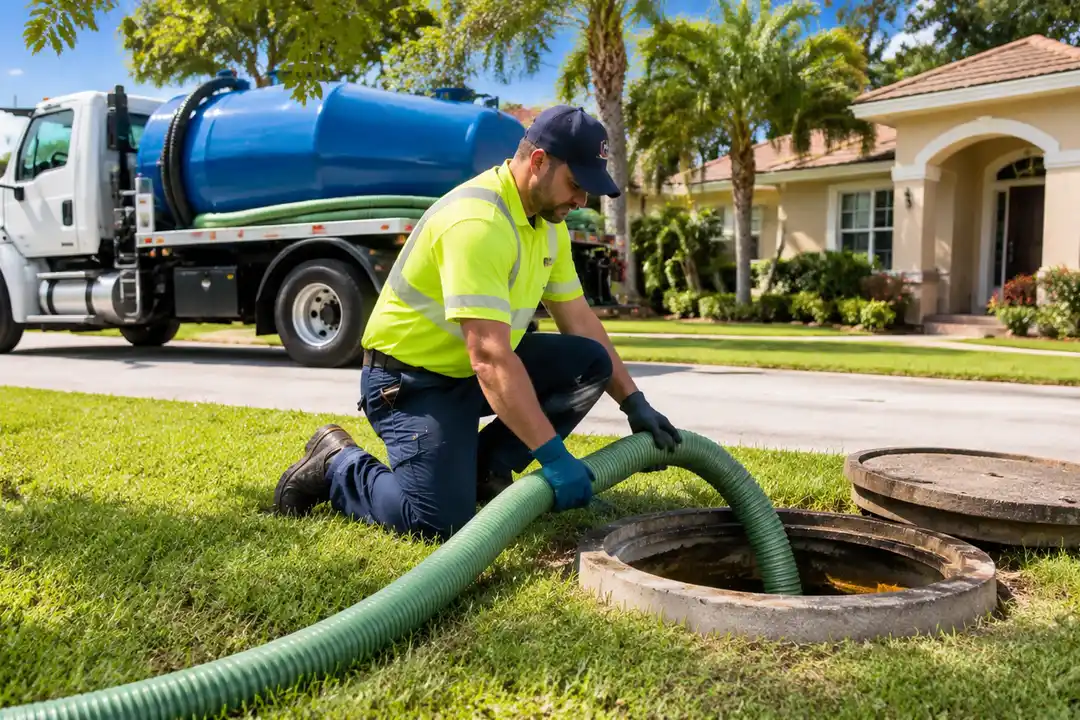
What Happens During a Cleaning Visit?
Our crew follows the same order on every job, so nothing gets skipped.
Find and Open Every Lid
We open the large main lid over each chamber, not just a small inspection port. Kansas State guidance says pumping through the small ports leaves too much behind. If your lids are buried, we dig to them or suggest risers.
Measure Sludge and Scum First
Before we pump, we lower a clear measuring tube to the floor. It shows the depth of each layer. Those numbers go on your report, so you can compare them on the next visit.
Break Up the Crust and Backflush
The scum crust gets broken apart so the hose can reach it. Then we pull liquid out and push it back in a few times. That backflushing lifts packed sludge off the floor so the truck can remove it.
Rinse the Walls and Floor, Then Jet the Lines
With the tank empty, we rinse buildup off the walls and floor. We also jet the inlet line from the house and the outlet line to the field. Many owners describe this step as "jetting the main line."
Clean the Effluent Filter
We pull the outlet filter and rinse it over the open lid. That way, the debris washes back into the tank instead of onto your lawn. A cracked filter gets replaced.
Check Baffles and Tees, Then Look With a Camera
We check that the inlet and outlet tees are in place and solid. A missing or broken tee lets solids flow straight out. If a line looks blocked or damaged, a small camera can show us where.
A careful process like this is also your best defense against a rushed job.
Did Your Last Pumper Skim the Tank?
Florida Rule 62-6.010 requires every chamber to be pumped out in full. If a crew leaves material behind, it must explain in writing why it did. That note must list the gallons pumped and what stayed in the tank. The same rule bans pumping through the inlet or outlet.
So if you see thick sludge after a visit and got no written note, ask questions. Some out of state guides suggest leaving a little sludge to "seed" the tank. Florida's rule does not allow that without a written reason. Your tank refills with fresh waste and bacteria on its own within days.
The Florida Department of Environmental Protection sets these rules for every licensed septage hauler. Ask your company how it meets them before you book.
Another common mix up comes from the word "clean out."
Is a Septic Clean Out the Same as a Tank Cleaning?
No. A clean out is a capped pipe near your house that opens into the sewer line. Tank cleaning happens through the lids on the tank itself. When you search for septic clean outs near you, you may find both services listed under the same name.
The clean out pipe lets a crew clear clogs in the line between your house and tank. It usually sits a few feet from your foundation with a round cap.
Can you pump a tank through a clean out? No. The pipe is far too small. Florida also bans pumping through the inlet or outlet, so the crew must work through the main lid.
Getting to that lid can be the hardest part of the job.
What If Your Tank Lids Are Buried?
Many older Orlando tanks have lids buried under a foot or more of soil. Florida requires a manhole over each compartment. The inlet and outlet manholes must sit close to the ground surface. On older homes, though, soil and landscaping often cover them completely.
A riser solves this. It raises the lid to ground level, so every future cleaning starts without digging. Most owners add one the first time the crew digs. Our locating and risers page covers sizes and options.
Timing matters as much as access.
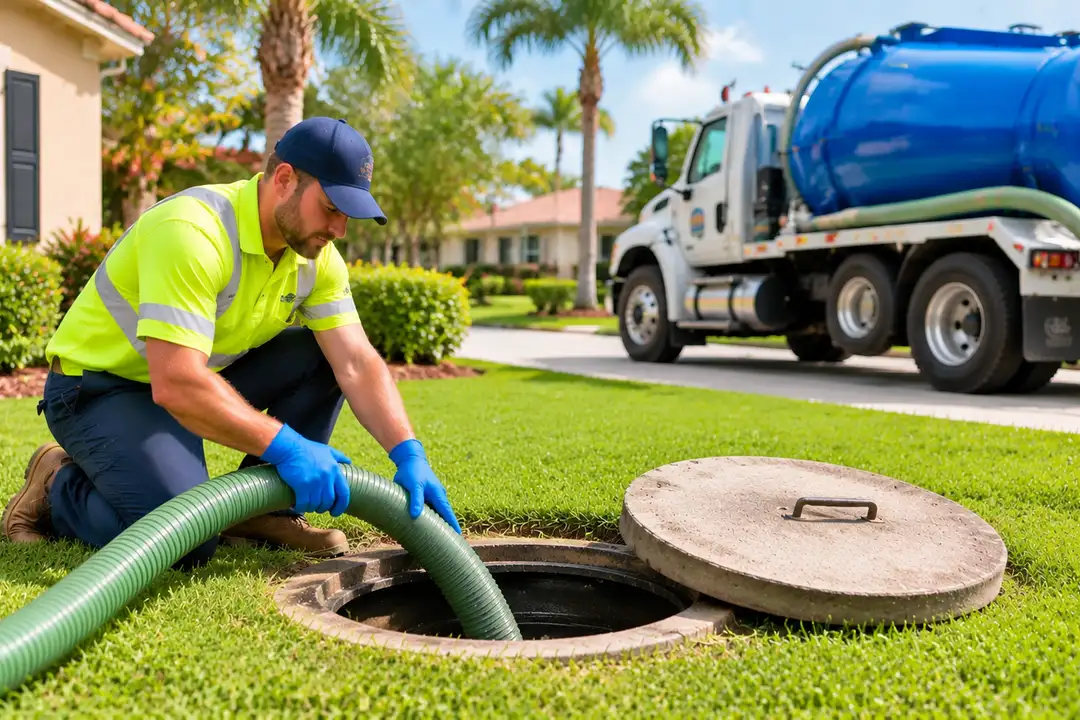
Is It Safe to Clean a Tank in the Rainy Season?
Wait until the ground dries out. UF/IFAS Extension advises against opening or pumping a tank while the soil is still saturated. A fully emptied tank in soaked ground can shift or be damaged. Book the service once the yard has drained.
This matters more in Central Florida, where summer storms can keep yards wet for days. Did heavy rain slow your drains? Cut back on water use and call us to plan the right time. Our pumping page explains what to do after hurricanes and floods.
Once the work is done, you should have proof.
What Is in Your Cleaning Report?
Every Orlando septic tank cleaning should end with 5 items in writing. You should get sludge and scum depths before and after the work. You should also get gallons removed from each chamber, photos, and notes on the filter and baffles. If anything was left behind, the report should explain why.
Keep this report with your home records. It helps you plan the next service, and it gives a buyer or inspector clear proof of care. If a future crew finds a problem, you can compare their numbers to these.
Now for the question of price.
How Much Does Septic Tank Cleaning in Orlando, FL Cost?
A basic pump out averages about $350 in Orlando, according to Angi. A deep clean costs more, because it adds jetting, filter work and extra time on site. National guides put jetting at $150 to $450 and filter cleaning at $100 to $200 on top of pumping.
Your price depends on a few things. Thick or packed sludge takes longer to remove. Buried lids add digging time. More chambers and longer hose runs also raise the total. We give you a written quote before we start. For full price ranges by tank size, see our pumping page and cost guide.
Price matters, but so does the crew you hire.
Who Cleans Septic Tanks Near You?
Comparing septic tank cleaning services near you comes down to a few clear questions. Weighing septic tank cleaning Orlando companies works the same way. Ask each company these before you book:
- Will you empty every chamber in full?
- Do you break up the crust and backflush the tank?
- Will you measure sludge and scum before and after?
- If you leave anything behind, will you explain it in writing?
- Can I see photos of the tank before and after?
Any licensed septage hauler in Florida should answer yes to the first four. We serve homes across Orange, Seminole, Osceola and Lake County. That includes Winter Park and the towns around Orlando.
Many owners also ask if the job needs a permit.
Does Cleaning Need a Permit or Fall Under Florida's New Septic Law?
No permit is needed for a cleaning. Florida Rule 62-6.002 says removing tank contents is not a repair when the drain field is not disturbed. The new rules target new systems and repairs. A 2023 law, HB 1379, requires nitrogen reducing systems for new systems on small lots near protected waters.
There is also a local rule to know about. Since March 1, 2025, repairs near Wekiwa Springs and Rock Springs carry a stricter rule. On lots under 1 acre, they trigger a nitrogen reducing upgrade. A cleaning does not trigger that rule. If the cleaning reveals damage that needs repair, though, the upgrade may apply.
Cleaning Questions From Orlando Homeowners
Still have a question? Call and talk to a real person.
Call (321) 872-9877 →How Long Does a Deep Clean Last Before the Next Service?
A full cleaning resets your tank to empty. After that, most homes go back on a normal schedule of every 3 to 5 years. Your sludge readings help set the right date.
Why Is My Tank Full of Water Right After a Cleaning?
That is normal. Your tank is meant to hold liquid. It starts filling as soon as you use a sink or toilet. It reaches its normal level within days.
Do Additives or Baking Soda Replace a Cleaning?
No. The EPA does not recommend septic additives, and some can harm your system. Only a truck can remove the solids that build up in your tank.
Can You Clean a Septic Tank Without Pumping It?
No. Sludge and scum must leave the tank by vacuum truck. Products and home remedies cannot remove them. Skipping the truck only lets solids build toward the outlet.
How Often Does a Septic Filter Need Cleaning?
There is no set schedule. Have it checked at every service visit. A filter that clogs between visits usually means the tank holds too many solids.
Can a Cleaning Unclog a Leach Field?
No. A cleaning stops new solids from reaching the field, but it cannot clear a field that is already clogged. That takes a drain field repair or restoration.
Where Does the Waste Go?
Florida requires haulers to take septage to a disposal site approved by the state. Spreading it on land is not allowed. Ask your company where it takes each load.
Do I Need to Be Home During the Cleaning?
Not always. The crew needs access to the tank lids and the clean out, plus open gates. We send your report and photos when the job is finished.
Does Homeowners Insurance Pay for a Cleaning?
Usually not. Insurers treat routine septic care as an owner’s cost. If a sudden event damaged your system, check your policy and call your agent.
Book a Septic Tank Cleaning Service in Orlando, FL
Want a tank that is truly empty, measured and documented? Call (321) 872-9877 or book online to schedule your visit. We serve Orange, Seminole, Osceola and Lake County, and you get a written report on every visit.